How does cedar resist moisture and decay in Houston's climate?
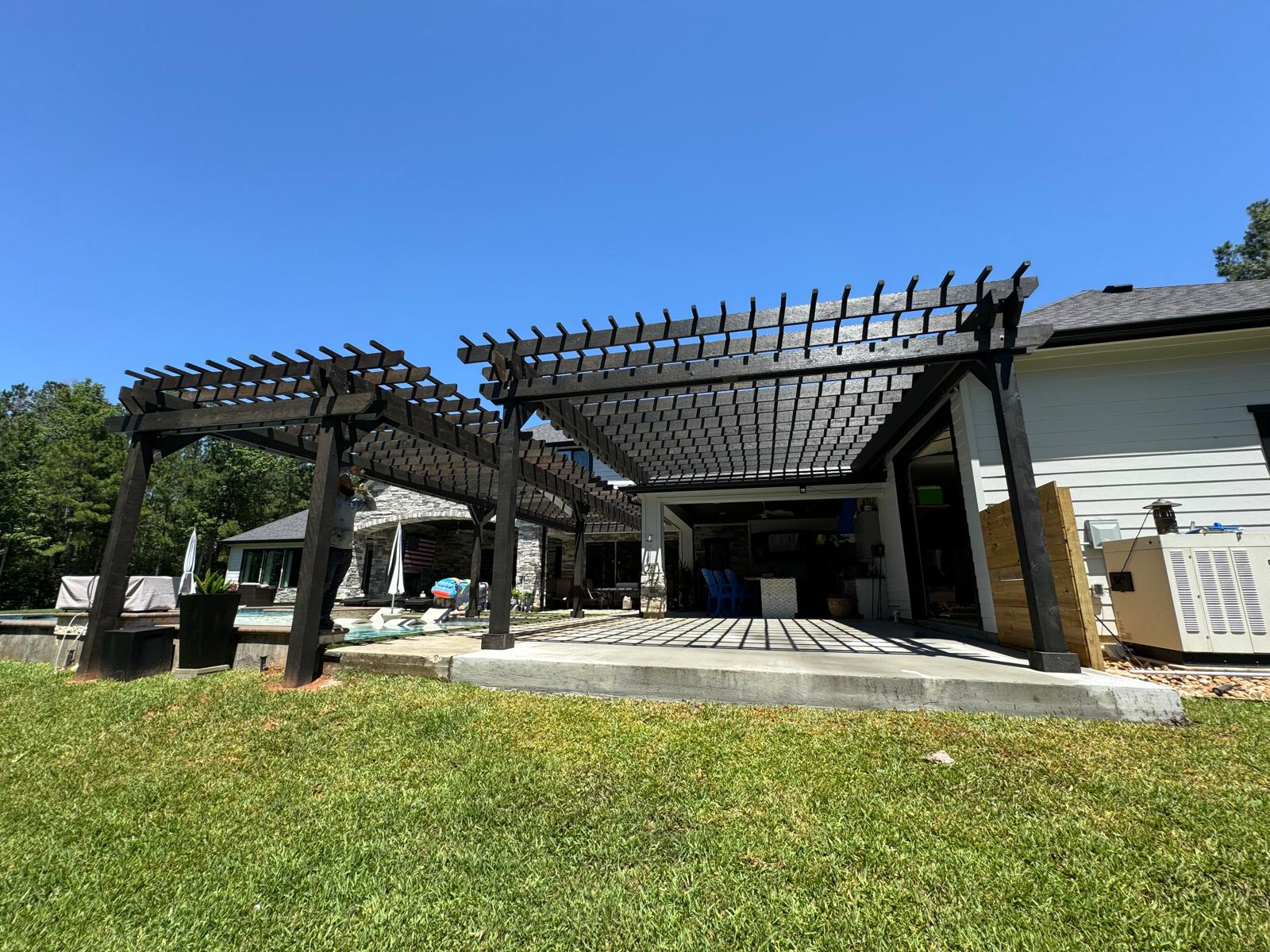
Cedar contains natural preservatives called thujaplicins that actively repel moisture, mold, and wood-destroying insects. In Houston's 75% average humidity and 50+ inches of annual rainfall, these oils prevent the rot and warping that destroy untreated woods within 5-7 years. Cedar's cellular structure also allows it to expand and contract through Houston's temperature swings—from 40°F winter lows to 100°F summer highs—without cracking or splitting.
The wood's natural fungicide properties mean you won't see the black mold streaks common on pressure-treated pine after Houston's notorious afternoon thunderstorms. According to the USDA Forest Products Laboratory, Western Red Cedar ranks as one of the most decay-resistant softwoods available for outdoor construction, outperforming pine, oak, and most tropical hardwoods in moisture-rich environments.
At Pergola Builder Houston, we've installed cedar structures across the greater Houston area for over a decade, and the material consistently outperforms alternatives in our climate. Properties we built in Katy and Sugar Land 15 years ago still show minimal weathering. For homeowners in The Woodlands and other heavily wooded areas with high moisture, cedar delivers the durability you need.
What are the shading and ventilation benefits of cedar pergolas?
Cedar pergolas reduce direct sunlight by 50-70% while maintaining continuous airflow, creating outdoor spaces 10-15°F cooler than unshaded areas during Houston summers. The open beam design blocks harsh midday UV rays while allowing heat to escape upward, preventing the stagnant air pockets that make covered patios unbearable in July and August.
Unlike solid patio covers that trap heat and humidity, pergolas let Gulf Coast breezes flow through your outdoor space. This ventilation is critical in Houston, where afternoon heat indices regularly exceed 105°F from June through September. You can adjust shade coverage by spacing beams closer together or adding retractable fabric panels for peak sun hours while keeping the structure breathable.
We've designed hundreds of cedar pergolas throughout the Houston area, and clients consistently tell us their outdoor spaces become usable again during summer months. The natural insulation properties of cedar also mean the beams themselves don't become scalding hot like metal structures. Check our gallery to see installations showing different beam spacing configurations for varying shade levels.
How does cedar complement Houston architecture?
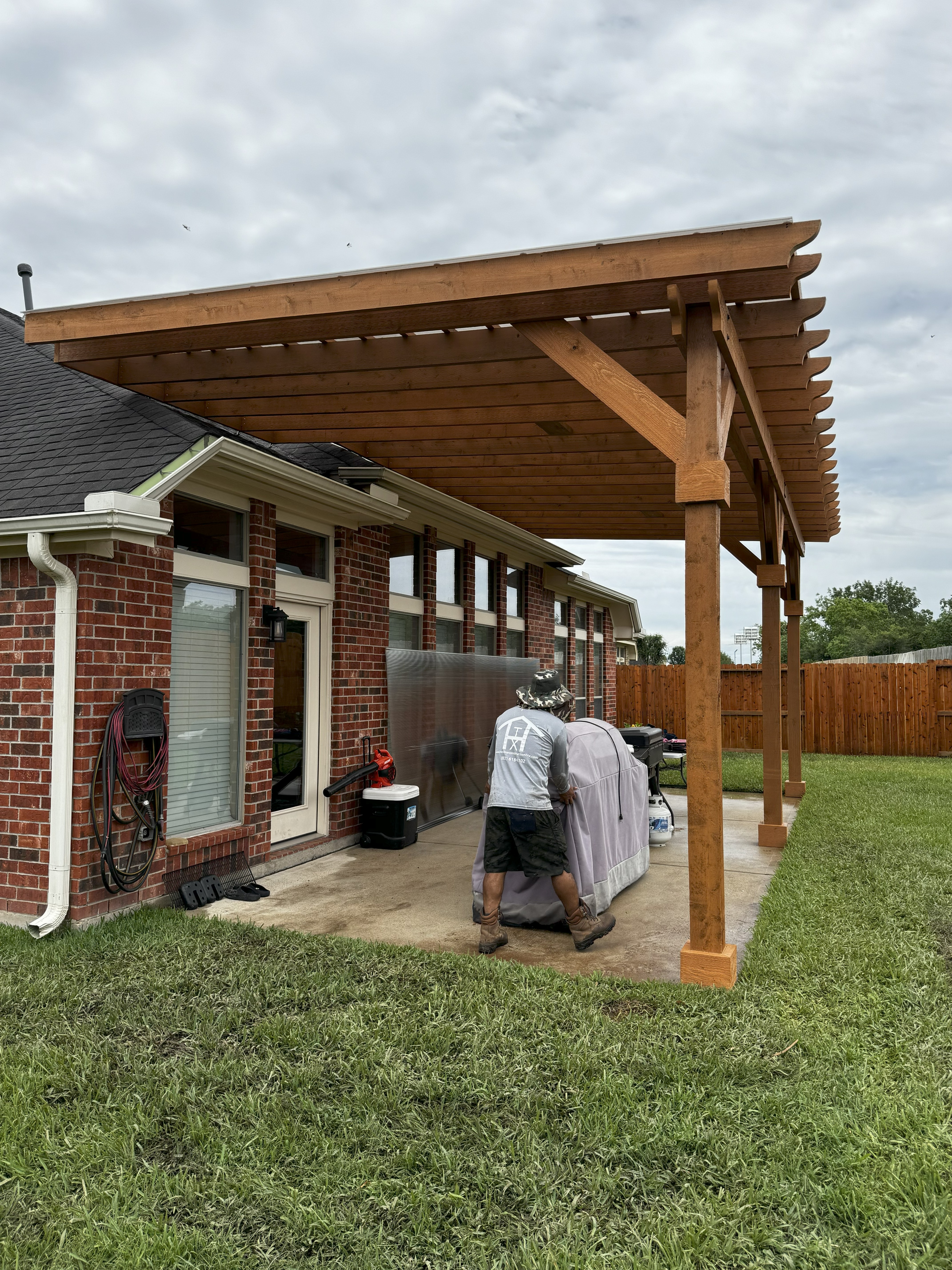
Western Red Cedar's warm amber to reddish-brown tones harmonize with Houston's brick colonials, Hill Country limestone facades, and modern stucco designs. The wood's straight, tight grain adds refined texture without overwhelming architectural details, and its natural color deepens to a distinguished silver-gray patina over time if left unsealed—a look that complements both Memorial's traditional estates and Heights' contemporary renovations.
Cedar's workability allows us to craft custom profiles that match your home's existing trim, columns, and roofline details. For Spanish-style homes popular in Sugar Land, we can add curved braces and corbels. Modern homes in Cypress often feature clean-lined cedar pergolas with minimalist hardware that extend the home's geometric language into the landscape.
According to real estate data from the City of Houston Planning Department, quality outdoor structures add 7-12% to home values in Harris County. Cedar pergolas specifically appeal to buyers because they signal low-maintenance outdoor living—a priority in our climate. At Pergola Builder Houston, we design every structure to look like it was part of your home's original plan, not an afterthought.
Why is investing in cedar pergolas a long-term solution for outdoor living?
Cedar pergolas deliver 20-25 years of service in Houston's climate with basic maintenance, compared to 8-12 years for pressure-treated pine and 10-15 years for composite materials that fade and accumulate heat. The wood's natural preservatives eliminate the need for annual staining or chemical treatments, reducing lifetime maintenance costs by $2,500-$4,000 compared to non-cedar alternatives.
A properly installed cedar pergola requires only annual cleaning with mild soap and water, plus optional sealing every 3-4 years if you want to maintain the original color. The structure won't twist, warp, or develop the structural issues that plague cheaper materials in Gulf Coast humidity. We've seen poorly built pressure-treated pergolas in Pearland require full rebuilds after just 6 years, while our cedar installations from 2010 still function perfectly.
At Pergola Builder Houston, we back our craftsmanship with warranties that reflect cedar's proven longevity. The upfront investment—typically 30-40% more than treated pine—pays for itself through decades of use without replacement. When you factor in Houston's harsh conditions, cedar isn't just a premium choice; it's the practical one.
What are the aesthetic benefits of cedar pergolas in Houston?
Cedar pergolas create an instant focal point with rich color variation ranging from creamy sapwood to deep reddish heartwood. Each beam showcases unique grain patterns that add organic visual interest to outdoor spaces. The wood accepts stains beautifully if you want to match specific color schemes, or it weathers naturally to an elegant silvery patina that looks intentionally rustic against Houston's lush landscaping.
The texture of cedar provides warmth that metal and vinyl structures can't replicate. When integrated with native Texas landscaping—live oaks, crape myrtles, and Texas sage—cedar pergolas feel like natural extensions of the environment rather than manufactured add-ons. This organic aesthetic works equally well in Memorial's established neighborhoods and new developments in League City.
Cedar's natural beauty also improves with age rather than deteriorating. While synthetic materials fade to chalky pastels under Texas sun, cedar develops character through weathering. Clients tell us their 10-year-old pergolas look better now than at installation—the wood has settled into the landscape like it's been there for generations.
.jpg)
How does cedar stand up to Houston's intense sun exposure?
Cedar contains lignin compounds that absorb and dissipate UV radiation, protecting the wood's structural integrity even after years of direct Gulf Coast sun exposure. While untreated cedar will lighten from its original amber tone to silver-gray over 18-24 months of sun exposure, this color change is purely cosmetic—the wood maintains its full strength and doesn't become brittle like pressure-treated lumber or composites.
In testing, cedar exposed to intense UV rays shows 60% less surface degradation than pine after five years of exposure. The wood's natural extractives act as built-in sunscreen, preventing the cellular breakdown that causes splintering and structural weakness. During Houston's peak UV index months (May through August, when readings hit 10+), this protection proves essential for any outdoor structure.
We see the difference firsthand when renovating older pergolas across the Houston area. Cedar structures from the 1990s still have solid, intact beams, while pine pergolas from the same era show deep cracks, warping, and rot. If you want to preserve cedar's original color, applying a UV-protective sealant every 3-4 years maintains the warm tones indefinitely. Our team at Pergola Builder Houston can handle this maintenance, or we'll show you how to do it yourself in under an hour.
What maintenance is required for cedar pergolas in Houston?
Cedar pergolas need only three maintenance tasks: annual washing with garden hose pressure to remove pollen and debris, optional clear sealer application every 3-4 years to preserve original color, and semi-annual inspection of hardware and joints. This 2-3 hour annual commitment prevents the intensive sanding, staining, and board replacement that other woods demand in Houston's climate.
For clients who want the natural weathered gray look, maintenance drops to just clearing debris from beam tops and checking that water drains properly—about 30 minutes twice yearly. The wood itself requires no chemical treatments because its natural oils repel insects and decay. Unlike composite materials that accumulate dirt in their textured surfaces, cedar's smooth grain rinses clean with plain water.
At Pergola Builder Houston, we install all cedar structures with marine-grade stainless steel hardware that won't rust or stain the wood in Houston's humidity. This attention to detail means your pergola won't develop the black streaks and corrosion marks common on installations using standard galvanized fasteners. We provide maintenance guides with every installation and offer seasonal service packages for clients who prefer professional care.
How does cedar compare to other woods for pergolas in Houston?
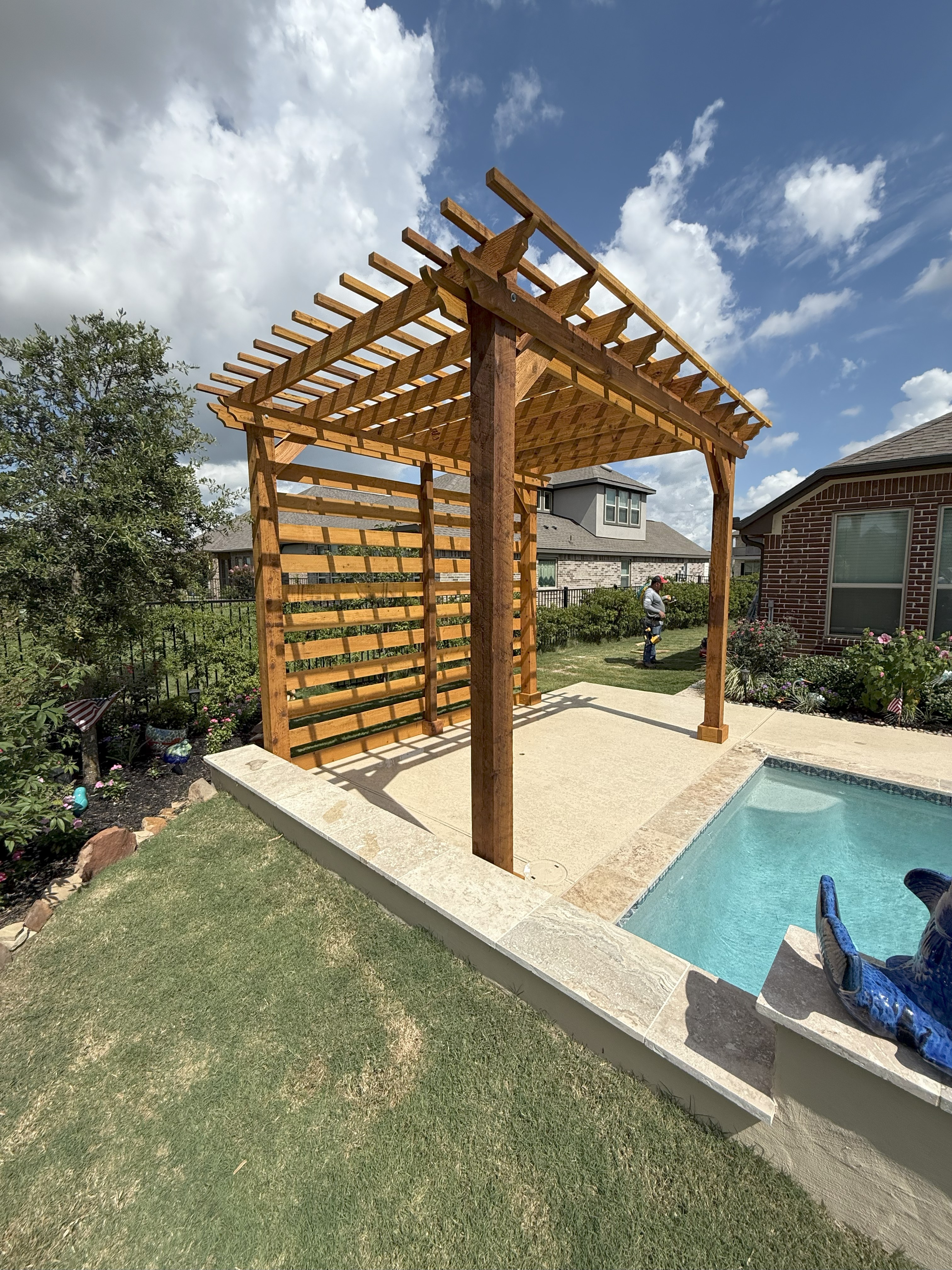
Cedar outperforms pressure-treated pine by 10-15 years in lifespan, resists warping 80% better than oak in humidity, and requires 60% less maintenance than redwood while costing 25-35% less than tropical hardwoods like ipe. Unlike pine's tendency to crack and splinter in Houston's wet-dry cycles, cedar's stable cellular structure holds fasteners securely for decades without splitting at joints—the most common failure point in outdoor structures.
Pressure-treated pine costs less initially but requires bi-annual staining and develops structural problems within 8-10 years in Gulf Coast conditions. Oak, while strong, absorbs moisture readily and becomes heavy, prone to mold, and difficult to work with for the spanning distances pergolas require. Composite materials seem low-maintenance but trap heat (making beams uncomfortable to touch in summer), fade to unappealing colors, and cost 40-60% more than cedar with no performance advantage in our climate.
We've built with every material available, and cedar consistently delivers the best value over a pergola's lifetime. Homeowners in Katy and Spring who replaced failed pine structures with cedar universally wish they'd started with cedar—the total cost ends up lower when you account for rebuilds and constant maintenance.
Pro Tip: At Pergola Builder Houston, we've learned that applying a water-repellent preservative within 30 days of installation locks in cedar's natural color for 4-5 years instead of 2-3. This timing takes advantage of the wood's fresh-cut cellular structure before UV exposure begins the silvering process. We include this treatment as a standard option because it dramatically reduces long-term maintenance for clients who want to preserve that rich amber tone.